

Introduction
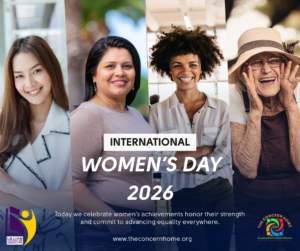
Every year on March 8, the world comes together to commemorate International Women’s Day (IWD), a global moment dedicated to celebrating the achievements of women while reflecting on the progress made toward gender equality, inclusion, and women’s empowerment.
It is also a time to acknowledge the work that still lies ahead. Over the decades, various themes have been introduced to inspire action, deepen awareness, and mobilise societies toward achieving full equality and justice for women and girls across the world.
The theme for International Women’s Day 2026 – “Give to Gain” reminds us of an important truth: progress thrives where generosity, collaboration, and shared responsibility exist. When we give, we create pathways for growth. When we invest in women, society gains strength. “Give to Gain” emphasises the transformative power of reciprocity and support. When individuals, communities, institutions, and governments give intentionally, whether through opportunities, resources, knowledge, advocacy, or mentorship, the result is multiplied progress for women and for society at large.
Giving is not a subtraction; it is intentional multiplication.
When women thrive, families flourish.
When families flourish, communities prosper.
When communities prosper, nations rise.
Giving may come in many forms – time, mentorship, education, training, visibility, advocacy, funding, infrastructure, or simply creating space for women’s voices to be heard. Each contribution strengthens the collective effort toward a more just and equitable world. The question then becomes:
What will you give to gain gender equality?
A Little Journey Down Memory Lane
As a Social Worker and Advocate for Women and Girls, reflecting on International Women’s Day compels me to look back at the long journey women have traveled. For centuries, women across many societies have been placed at a disadvantage, often due to deeply rooted religious, cultural, and social structures that promoted the belief that women should “be seen and not heard.” In some contexts, women were expected neither to be seen nor heard. Yet history repeatedly shows that women have always been powerful drivers of societal growth and transformation. Their contributions, though often overlooked, have been immense. When women’s potential is recognized and when they are given equal opportunities alongside their male counterparts, their impact becomes extraordinary.
In Nigeria, the struggle for women’s rights, equality, and empowerment spans three major historical epochs: the pre-colonial, colonial, and post-colonial periods.
Women in Pre-Colonial Nigeria
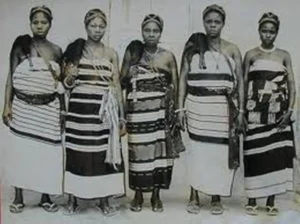
Contrary to the misconception that women were always excluded from public life, pre-colonial Nigerian societies witnessed significant female participation in economic, political, and social systems. Women were not only mothers and caretakers within the domestic sphere; they were also economic actors, traders, producers, healthcare providers, and community leaders.
Many women were actively involved in agriculture, working alongside their husbands and children in farming activities that sustained households and communities.
They also played crucial roles in production and trade, particularly in the palm oil and palm kernel industries, as well as in local and long-distance trade across the country.
In the healthcare sector, women served as traditional birth attendants and healers, providing essential services within their communities.
Women were also influential in spiritual and cultural life, participating actively in traditional religious practices and ceremonies. This historical presence partly explains why women continue to dominate religious gatherings and faith communities today.
The creative and cultural sectors also benefited from women’s contributions. Women created music, songs, and dances that shaped cultural heritage, while many acquired traditional skills such as weaving, sewing, pottery, hair plaiting, and the weaving of traditional fabrics like Aso-Oke.
Women also held positions of leadership and influence. Some even led resistance and warfare. History remembers remarkable figures such as Queen Amina of Zazzau, Moremi of Ile-Ife, and Emotan of Benin, whose courage and leadership remain symbols of women’s strength and resilience.
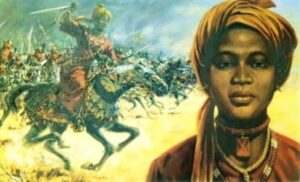
It is therefore safe to say that many women in pre-colonial Nigeria were economically active and influential.
However, despite their contributions, customary laws often limited women’s rights, particularly regarding ownership and inheritance of land and property.
Colonial Era: A Shift in Power
The colonial period introduced major structural changes that significantly altered women’s socio-economic positions. The export-oriented colonial economy undermined traditional occupations dominated by women, weakening their economic independence. Markets that women once controlled were increasingly taken over by colonial authorities and expatriate traders. Additionally, British colonial administration introduced patriarchal governance structures that restricted women’s political participation and influence. Women who once played complementary roles within traditional systems were increasingly pushed toward domestic confinement and economic marginalization.
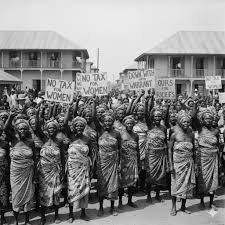
Aba Women Riot of 1929
However, Nigerian women did not remain silent. They resisted oppression and injustice, organizing powerful movements that challenged colonial policies. One of the most remarkable acts of resistance was the 1929 Aba Women’s War, where thousands of women protested unfair taxation and colonial administration. Women’s movements also gained momentum through organizations such as the Abeokuta Women’s Union, led by Funmilayo Ransome-Kuti, a fearless advocate for women’s rights and political participation. These women laid the foundation for future struggles for equality.
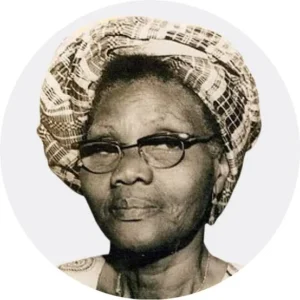
Chief (Mrs) Funmilayo Ransome-Kuti
Post-Colonial Nigeria and Women’s Progress
Following independence, Nigerian women continued to contribute significantly to national development. In many rural communities, women became even more central to agricultural production, particularly when many able-bodied men left home for war labor and urban employment.
Despite their contributions, women’s representation in formal employment remained relatively low, except in sectors such as healthcare, where women increasingly entered professions like nursing and medicine.
Limited access to higher education and low university admission rates for women further slowed their advancement. Even today, structural barriers, economic inequality, cultural bias, limited opportunities, and insecurity continue to affect many Nigerian women, particularly those in rural and conflict-affected communities.
The Reality Facing Women Today
In contemporary Nigeria, while progress has been made, many women still face deep systemic marginalisation. For countless women, especially those living in remote and conflict-ridden areas, basic survival has become a daily struggle.
The situation is particularly heartbreaking for women and girls trapped in terrorist-controlled regions, where many are subjected to unimaginable violence, exploitation, and abuse.
Many are forced into sexual slavery, forced marriages, displacement, and other grave violations of human rights.
Their stories are often unheard. Their pain remains unseen.
Yet they remain women whose dignity and freedom matter.
A Call to Give, So That All May Gain
As we reflect on International Women’s Day 2026, my thoughts and prayers go especially to the women and girls hidden in forests, camps, and conflict zones across Nigeria, those who endure suffering that many of us can scarcely imagine.
Their liberation, healing, and restoration must matter to all of us.
The theme “Give to Gain” challenges us to move beyond words into action.
What will we give?
Will we give our voices to advocate for the voiceless?
Will we give our resources to empower vulnerable women?
Will we give our platforms to amplify women’s stories?
Will we give our time to mentor the next generation of girls?
Gender equality will not happen by chance.
It will happen when individuals, institutions, and societies deliberately invest in the empowerment, protection, and advancement of women and girls.
When we give hope, opportunity, justice, and dignity to women, we gain something far greater:
A more humane world.
A more balanced society.
A more prosperous future for all.
So today, I ask again:
What will you give, so that we may all gain?
Leave a Reply