


Changing the Narrative on Suicide: Building Social Support Systems for Persons Experiencing Suicidal Thoughts.
A Social Work Perspective
Introduction
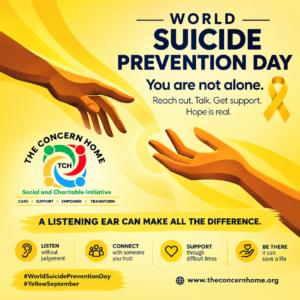
As we commemorate World Suicide Prevention Day 2026, themed “Changing the Narrative on Suicide,” we are reminded of the importance of rethinking how we respond to people experiencing emotional distress. We must move away from judgement, stigma and silence towards compassion, connection, professional support and collective responsibility.
As a social worker, I have come to understand that people do not exist in isolation. Their experiences are shaped by their families, relationships, communities, socioeconomic circumstances, health, environment and access to support and opportunities. Therefore, when we talk about suicide prevention, we must look beyond the individual and ask an equally important question:
What is happening around this person?
People who experience suicidal thoughts may be dealing with emotional or social pain that feels overwhelming. At such moments, they may struggle to see alternatives or believe that their circumstances can change. We must therefore resist the temptation to label, judge or dismiss their experiences as attention-seeking, weakness or a lack of faith.
Instead, we need to listen, understand and connect.
Suicide remains a significant public health and social concern. According to the World Health Organization (WHO), more than 720,000 people die by suicide every year, with each loss having profound social, psychological, emotional and economic consequences for families, friends, workplaces and communities.
Behind every statistic is a person, a family and a community affected by loss.
Suicide prevention, therefore, is not simply about responding to an individual in crisis. It is also about building societies in which people experiencing distress can find connection, safety, acceptance, professional support and hope.
Changing the Narrative

The theme “Changing the Narrative on Suicide” challenges us to confront harmful myths, reduce stigma and promote open, compassionate and responsible conversations about suicide.
For too long, conversations around suicide have sometimes been surrounded by fear, shame, judgement and misunderstanding. These attitudes can make people experiencing severe distress less likely to speak about what they are going through or seek appropriate help.
Changing the narrative means creating environments where people can say, “I am struggling,” without being immediately judged or condemned.
It means learning to listen without rushing to criticise.
It means taking expressions of hopelessness or severe distress seriously.
It means replacing “What is wrong with you?” with “What are you going through?”
And it means understanding that offering support does not mean that we must have all the answers. Sometimes, our most important role is to listen, stay connected and help the person reach the appropriate professional or support service.
Building Social Support Systems

From a social work perspective, suicide prevention must include the deliberate strengthening of social support systems around individuals and families.
A strong support system can include family members, trusted friends, social workers, counsellors, psychologists, psychiatrists, healthcare professionals, teachers, faith communities, workplaces, schools, community organisations and relevant government and social services.
Each has a role to play.
Listen without judgement
A person in emotional distress may first need someone who is willing to listen without dismissing their feelings.
Listening does not mean agreeing with everything a person says. It means creating enough emotional safety for the person to express what they are experiencing and helping them connect with appropriate support.
Take distress seriously
We must move away from dismissing emotional distress as “attention-seeking,” “drama,” “laziness” or simply a lack of resilience.
When someone is struggling, our response can either create a pathway towards help or reinforce their isolation.
Strengthen meaningful connections
Social isolation can intensify distress. Families, friends, schools, workplaces, faith communities and neighbourhoods can all contribute to creating stronger networks of connection.
Sometimes, prevention begins with something as simple as checking in and staying connected.
Connect people to professional help
Social support is important, but it should not replace professional intervention.
Social workers, psychologists, psychiatrists, counsellors, doctors and other appropriate professionals each have important roles in assessment, intervention, treatment, safeguarding, rehabilitation and ongoing support.
Where there is immediate concern about someone’s safety, appropriate emergency or professional help should be sought without delay.
Look beyond the individual
This is one of the important contributions of the social work profession.
We ask:
What circumstances are affecting this person?
Is there family conflict?
Are they experiencing abuse or violence?
Are they being bullied?
Have they experienced a significant loss?
Are they socially isolated?
Are they experiencing financial hardship?
Do they have access to healthcare and other essential services?
Are there barriers preventing them from seeking help?
Understanding these circumstances enables us to develop more holistic interventions.
Advocate for systemic change
Changing the narrative also requires us to address the systems that influence people’s wellbeing.
Mental health and suicide prevention should be priorities within public policy, healthcare, schools, workplaces and community development.
Governments and institutions must strengthen mental health services, improve access to quality and affordable care, support prevention programmes, develop effective referral systems and ensure that vulnerable individuals are not left without appropriate support.
The Situation in Nigeria
In Nigeria, conversations about suicide cannot be separated from the wider realities confronting individuals and families.
Economic hardship, unemployment and underemployment, family conflict, relationship difficulties, violence and abuse, bullying, bereavement, social isolation, chronic health challenges, substance-related problems and limited access to appropriate mental health services can place significant pressure on people’s coping resources.
However, we must be careful not to reduce suicide to a single cause.
Suicide is complex and is rarely the result of one factor alone.
Individual experiences interact with family circumstances, relationships, social conditions, mental health, trauma, access to support and wider societal factors.
This is why a social work approach is essential.
Social workers understand the person within their environment. We assess needs, identify risks and protective factors, strengthen families and support networks, facilitate referrals, advocate for vulnerable people, mobilise resources and work collaboratively with other professionals and institutions.
Our role is not simply to ask, “What is happening to this person?”
We must also ask:
“What is happening around this person, and what can we do about it?”
From Awareness to Action

World Suicide Prevention Day should not be reduced to a single day of social media posts, speeches and awareness campaigns.
Awareness must lead to action.
We need more conversations about emotional wellbeing in our homes, schools, workplaces, churches, mosques and communities.
We need parents who can recognise when their children are struggling.
We need teachers who understand the importance of early identification and appropriate referral.
We need workplaces that take employees’ wellbeing seriously.
We need communities that do not shame people for seeking help.
We need accessible and coordinated mental health and social services.
And we need social workers and other professionals adequately supported and equipped to respond to people experiencing complex social and emotional challenges.
Changing the Narrative Begins With Us
Changing the narrative on suicide requires a collective shift—from silence to safe conversations, judgement to compassion, isolation to connection, and despair to pathways towards help.
As social workers, we have a responsibility to advocate for people whose voices may otherwise go unheard. But this responsibility does not belong to social workers alone.
Suicide prevention is everyone’s responsibility.
We may not always be able to remove every painful circumstance from someone’s life, but we can work towards ensuring that people do not have to face their difficulties without support.
Let us build families and communities where people feel safe enough to say:
“I am struggling.”
And where the response is:
“I hear you. You matter. You don’t have to face this alone. Let’s get you the support you need.”
This is what changing the narrative should look like.
Not merely talking about suicide differently, but building the relationships, systems and communities that make it easier for people to seek help and remain connected to support.
As we mark World Suicide Prevention Day 2026, let us move beyond awareness to action.
Let us listen.
Let us connect.
Let us support.
Let us advocate.
Let us build systems of care.
Because sometimes, changing the narrative begins with changing the way we respond to someone who is struggling.
— Mrs. Lillian Anyebe, MSW (Health Social Work)
Founder/CEO, The Concern Home Social & Charitable Initiative (TCH).
Leave a Reply